The Future of Ray Tracing for Gaming PCs
Future ray tracing will reshape PC gaming, but the best results still depend on a balanced GPU, CPU, display and carefully configured settings today.
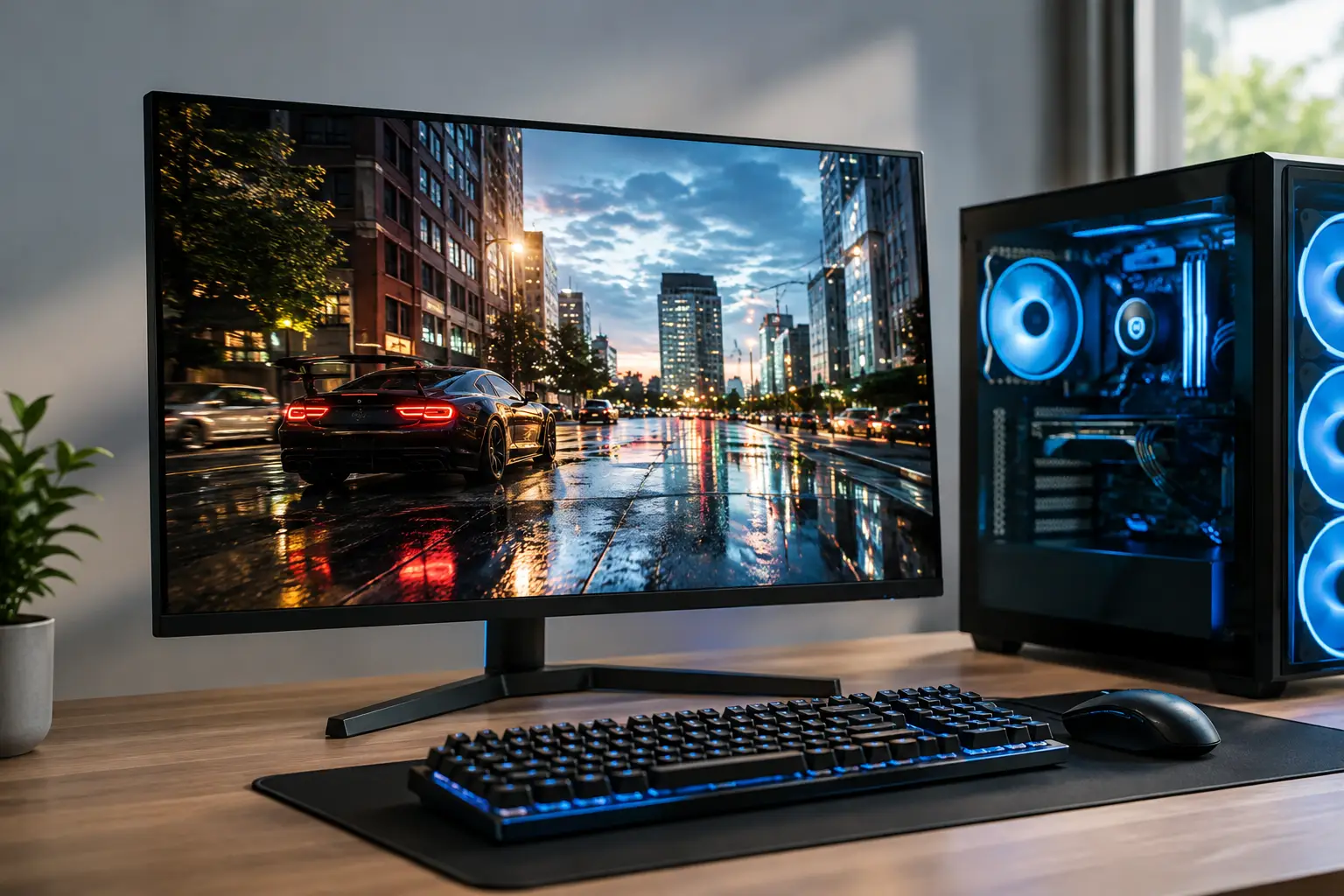
A rain-soaked street, a neon sign reflected in a shop window, the warm spill of light from an open doorway - these are the scenes where future ray tracing becomes more than a specification on a graphics card box. It is the technology pushing game lighting closer to the way light behaves in the real world. For PC gamers, the question is no longer whether ray tracing looks impressive. It is how to get those gains without sacrificing the responsive, high-frame-rate experience a premium gaming PC should deliver.
What the future of ray tracing actually means
Traditional game rendering relies largely on rasterisation. It is extremely fast and remains the foundation of modern PC gaming, but it uses carefully designed shortcuts to create shadows, reflections and lighting. Those shortcuts can look excellent. They can also break down in difficult scenes, such as a reflective room, a dark corridor lit by a moving torch, or a character standing between several light sources.
Ray tracing models the path of light more directly. A game can calculate accurate reflections, softer and more natural shadows, indirect lighting and light bouncing between surfaces. The result is not simply a shinier image. It can make materials, depth and atmosphere feel more convincing. A glossy floor reflects the correct objects. Coloured light from a stained-glass window affects the room around it. Shadows react properly as objects and lights move.
The next stage is path tracing, a more complete form of ray-traced rendering. Rather than selecting individual effects, path tracing simulates far more of the lighting in a scene. It can produce extraordinary results, particularly in games designed around it, but it remains demanding even for high-end hardware. For now, it is best viewed as a premium setting for players who value image quality and are prepared to tune their system around it.
The future is therefore not a single switch that every player will turn on. It is a gradual shift towards games using ray-traced techniques more widely, more intelligently and with less of a performance penalty.
Why AI is central to future ray tracing
The biggest change is not ray tracing alone. It is the combination of ray tracing with AI-assisted rendering. Ray-traced images can be noisy when the system does not calculate enough light samples. Denoising technology cleans up that noise, while upscaling renders the game at a lower internal resolution before producing a sharp image at your display's target resolution.
This matters because native 4K rendering with demanding ray-traced effects can place enormous pressure on a GPU. Quality upscaling gives the graphics card valuable headroom, making high-detail settings practical at frame rates that suit fast-paced games. The exact result depends on the game engine and the quality mode selected, but the improvement can be substantial.
Frame generation is another part of the picture. It creates additional frames between traditionally rendered frames, improving perceived smoothness in supported games. It is particularly useful in cinematic single-player titles where ray tracing has the greatest visual impact. However, it does not replace real rendering performance. A system needs a solid base frame rate first, especially in competitive games where input response matters as much as the number shown by a frame-rate counter.
For this reason, the best settings are rarely just “everything on”. A carefully configured 1440p system may deliver a better overall experience than a poorly balanced 4K configuration with every ray-traced option enabled. Resolution, refresh rate, genre and personal preference should all influence the choice.
The hardware that will matter most
The GPU remains the key component for ray tracing. Its dedicated ray-tracing hardware, memory capacity and overall raster performance determine how comfortably it can run modern titles. Buyers planning to keep a PC for several years should look beyond average frame rates in older games and consider how a graphics card performs with ray tracing enabled at their intended resolution.
Video memory also deserves attention. High-resolution textures, detailed game worlds and advanced lighting can all increase VRAM use. There is no single capacity that suits every game and resolution, but extra headroom is valuable for a system intended for demanding 1440p or 4K gaming over a longer ownership period. Reducing texture quality to avoid memory limits is rarely the experience buyers expect from a premium build.
A capable CPU is still essential, even though ray tracing is predominantly a GPU workload. Open-world games, busy multiplayer environments and high-refresh-rate displays can expose CPU limitations quickly. Pairing a powerful graphics card with an entry-level processor may save money at checkout, but it can restrict minimum frame rates and reduce the useful life of the system.
Memory, storage and cooling complete the picture. Fast NVMe storage helps reduce loading and asset streaming delays in large games. Sufficient system memory supports modern game requirements alongside background applications. Effective airflow and a correctly selected cooler help the processor and graphics card sustain their intended performance during long sessions, rather than reducing clock speeds because temperatures have climbed too high.
Choosing settings that suit the way you play
Ray tracing is most rewarding in slower-paced, visually rich games. Story-driven action titles, racing games, exploration games and detailed simulations often benefit from the atmosphere created by accurate lighting and reflections. In these games, a higher-quality preset, sensible upscaling and frame generation where appropriate can make excellent use of a modern GPU.
Competitive shooters, battle royale games and esports titles call for a different approach. Here, many players will rightly prioritise high native frame rates, low latency and clear motion over subtle reflection quality. Turning ray tracing down or off is not a compromise in skill. It is a sensible configuration choice for the type of game being played.
Display choice changes the calculation too. At 1080p, ray tracing can be accessible on more hardware, though very high refresh rates place their own demands on the system. At 1440p, many premium gaming PCs hit an appealing balance of detail and performance. At 4K, ray tracing looks striking, but a stronger graphics card and well-chosen upscaling settings become increasingly important.
Do not overlook the display's refresh rate, adaptive sync support and response time. A beautifully rendered frame is only part of the experience. The system, monitor and settings should work together to create motion that feels controlled and consistent.
Building for the next generation of lighting
Future ray tracing should influence a PC specification, but it should not dictate every component choice in isolation. Start with the games you want to play, the resolution of your current or planned monitor, and the frame rate you consider comfortable. From there, choose a graphics card with enough performance and memory for that target, then match it with a processor, power supply and cooling solution that allow it to perform properly.
Upgrade potential is worth considering as well. Games will continue to improve their lighting models, and display expectations will rise alongside them. A system with a quality power supply, sensible case airflow and a well-balanced platform is easier to refresh when the time comes to fit a newer GPU or expand storage.
This is where a tailored build has a clear advantage over a generic specification. Components should be selected as a complete system, not as isolated headline parts. At CraftCore, that means configuring a PC around your intended games and workload, then expertly handcrafting and fully testing it before it reaches you.
Ray tracing will keep becoming more convincing, but the best gaming experience will still come from balance: the right GPU for your resolution, the right display for your games, and settings chosen for how you actually want to play. Build around that foundation, and new lighting technology becomes something to enjoy rather than another compromise to manage.