Is a Custom Gaming PC Worth the Extra Cost?
Is a custom gaming PC worth it? Compare performance, component quality, upgrade potential and cost to decide whether a tailored build suits your needs.
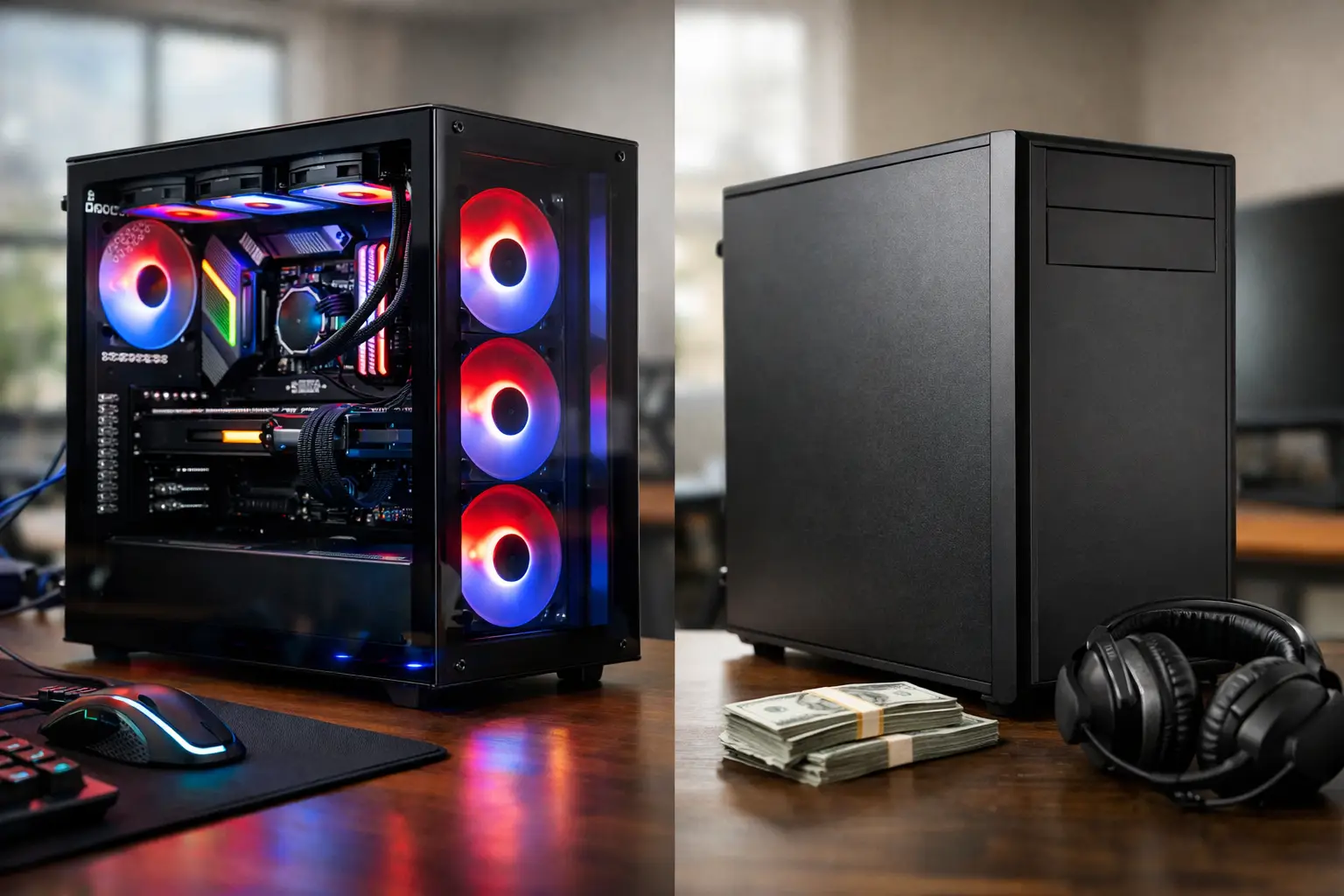
A gaming PC that looks impressive on paper can still disappoint where it matters: inconsistent frame rates in your favourite games, limited storage six months later, or a loud cooling setup during a long evening session. So, is a custom gaming PC worth it? For many players, creators and performance-focused desktop users, it is - but only when the specification is shaped around what they will genuinely do with it.
A custom system is not simply a collection of premium parts. Its value comes from choosing the right balance of processor, graphics card, memory, storage, cooling and case for your budget and priorities. That can mean higher frame rates at your chosen resolution, a quieter desk setup, a particular visual style, or the headroom to edit video and work with demanding software alongside gaming.
What you are paying for with a custom build
The headline price of a custom gaming PC can be higher than a discounted high-street pre-built. That difference is not automatically a sign that one option is poor value. Mass-market systems are often designed to meet a price point, which can lead to compromises in areas less visible on a product page, such as the power supply, motherboard, cooling, case airflow or future upgrade options.
With a tailored build, the budget can be allocated where it will have the most impact. A competitive player using a high-refresh-rate 1080p or 1440p monitor may benefit more from a fast processor and balanced graphics card than from cosmetic extras. Someone playing cinematic single-player titles at 4K may sensibly place more of the budget into the graphics card. A creator who games after work might need additional memory, fast storage and a processor that handles rendering workloads without holding the system back.
You are also paying for compatibility planning and build quality. Correct component selection matters. A powerful graphics card needs an appropriate power supply, a case with sufficient clearance and airflow, and cooling that can manage the heat produced under load. When these decisions are considered together, the PC performs as a complete system rather than a set of individually impressive specifications.
Is a custom gaming PC worth it for gaming performance?
Usually, yes, if you know the type of gaming experience you want. The greatest advantage is avoiding spend on parts that do not serve your target performance. There is little value in paying for hardware built around ultra-high-resolution gaming if your current monitor cannot show the benefit. Equally, pairing a premium display with a system that cannot maintain the frame rates you expect can leave the setup feeling unbalanced.
A custom configuration makes it easier to build around resolution, refresh rate and the games you actually play. Fast-paced shooters, simulation titles, open-world games and strategy games can place different demands on a PC. Some are more dependent on graphics performance, while others respond strongly to processor speed and memory capacity.
This does not mean every custom PC needs the most expensive available parts. Sensible specifications often deliver better value than chasing marginal gains at the very top end. The aim should be consistent, enjoyable performance at settings that suit your display, not an inflated component list.
The value of component quality beyond the spec sheet
Two systems can list the same processor and graphics card yet offer a noticeably different ownership experience. The supporting components influence noise levels, temperatures, reliability and how easy the PC is to live with over several years.
A well-matched motherboard provides the connections and expansion options you need without paying for features you will never use. Quality cooling helps sustain performance during extended gaming sessions rather than allowing heat to reduce clock speeds. A properly sized power supply gives the system stable power and leaves appropriate room for future upgrades. Case airflow is equally practical: it affects temperatures, fan noise and the long-term condition of internal components.
These are not glamorous decisions, but they are often where a carefully configured PC earns its keep. An expertly handcrafted and fully tested system provides reassurance that the parts have been selected to work together, installed with care and checked before delivery.
Upgrade potential can reduce the long-term cost
Gaming hardware moves quickly, but a good custom PC does not need replacing every time a new component generation appears. A balanced foundation lets you upgrade the parts that become limiting first, rather than starting again with an entirely new machine.
Storage is the most obvious example. Modern game libraries fill quickly, and adding another SSD later is straightforward when the system has suitable space and connections. Memory can also be upgraded where the motherboard and original configuration allow it. In time, a graphics card upgrade may provide a meaningful refresh for a system whose processor, power supply and cooling were selected with sensible capacity in mind.
There are limits. No PC is endlessly upgradeable, and buying excessive wattage, expansion slots or cooling today solely for a hypothetical future build can be wasteful. The practical approach is to choose a platform with realistic flexibility for the next few years, then spend the rest of the budget on performance you can use now.
When a pre-built gaming PC makes better sense
A custom gaming PC is not the right answer for every buyer. A proven pre-built configuration can be the better choice if you want a clear price, a quick decision and performance that already matches your needs. It can also offer strong value when a builder has created a well-balanced specification around a popular gaming target.
The key distinction is between a thoughtfully selected pre-built and a generic retail PC chosen only because its processor or graphics card looks impressive. A specialist pre-built should still use compatible, dependable components and be fully tested. It simply removes some of the configuration decisions.
For first-time buyers, this can be especially helpful. You do not need to become an expert in motherboard chipsets, fan curves or power delivery to own a capable machine. The best route is the one that gives you confidence in the final specification, whether that is a ready-to-order system or a tailored build with guidance.
Signs that customisation is worth the investment
Customisation has the strongest case when your requirements are specific. Perhaps you need a compact system for a limited desk space, a white build to suit the rest of your setup, quieter cooling for a shared room, or substantial storage for games and creative projects. Perhaps you use a particular monitor and want hardware chosen to make the most of it.
It is also valuable when a PC has more than one job. Gaming alongside streaming, 3D work, music production, coding or professional applications creates a different set of priorities from gaming alone. More memory, additional fast storage and stronger multi-core performance may matter more than pushing every pound towards the graphics card.
CraftCore’s PC Builder approach is designed for precisely this situation: selecting a premium system around the performance, visual design and budget that make sense for the individual buyer, rather than forcing every customer into the same template.
How to decide before you buy
Start with the parts of your current setup that set the target. Your monitor resolution and refresh rate, the games or applications you use most, the storage you need and the amount you are comfortable spending all provide useful boundaries. From there, choose the graphics and processor performance that meet that target, then protect the rest of the build with appropriate cooling, power and airflow.
Be wary of specifications that devote almost the entire budget to a single headline component. A high-end graphics card is valuable, but it should not come at the expense of a weak power supply, cramped storage or inadequate cooling. Likewise, visual additions are worth choosing if they matter to you, but they should not prevent the PC from meeting its core performance goal.
Ask whether the configuration remains sensible after the excitement of buying it has passed. Will it run the games you play well? Will it fit your workspace, connect to your peripherals and leave enough room for your files? Will you be happy with its noise, appearance and upgrade path? Those answers are more useful than buying the most expensive specification your budget can technically reach.
A custom gaming PC is worth it when it gives you a machine that feels deliberately yours: capable where you need it to be, carefully built, and ready to remain part of your setup long after the first game is installed.