Pre-Built vs Custom Gaming PC: Which Fits?
Choosing a pre-built vs custom gaming PC? Compare price, performance, upgrades, warranty and build quality to find the suitable system for your games.
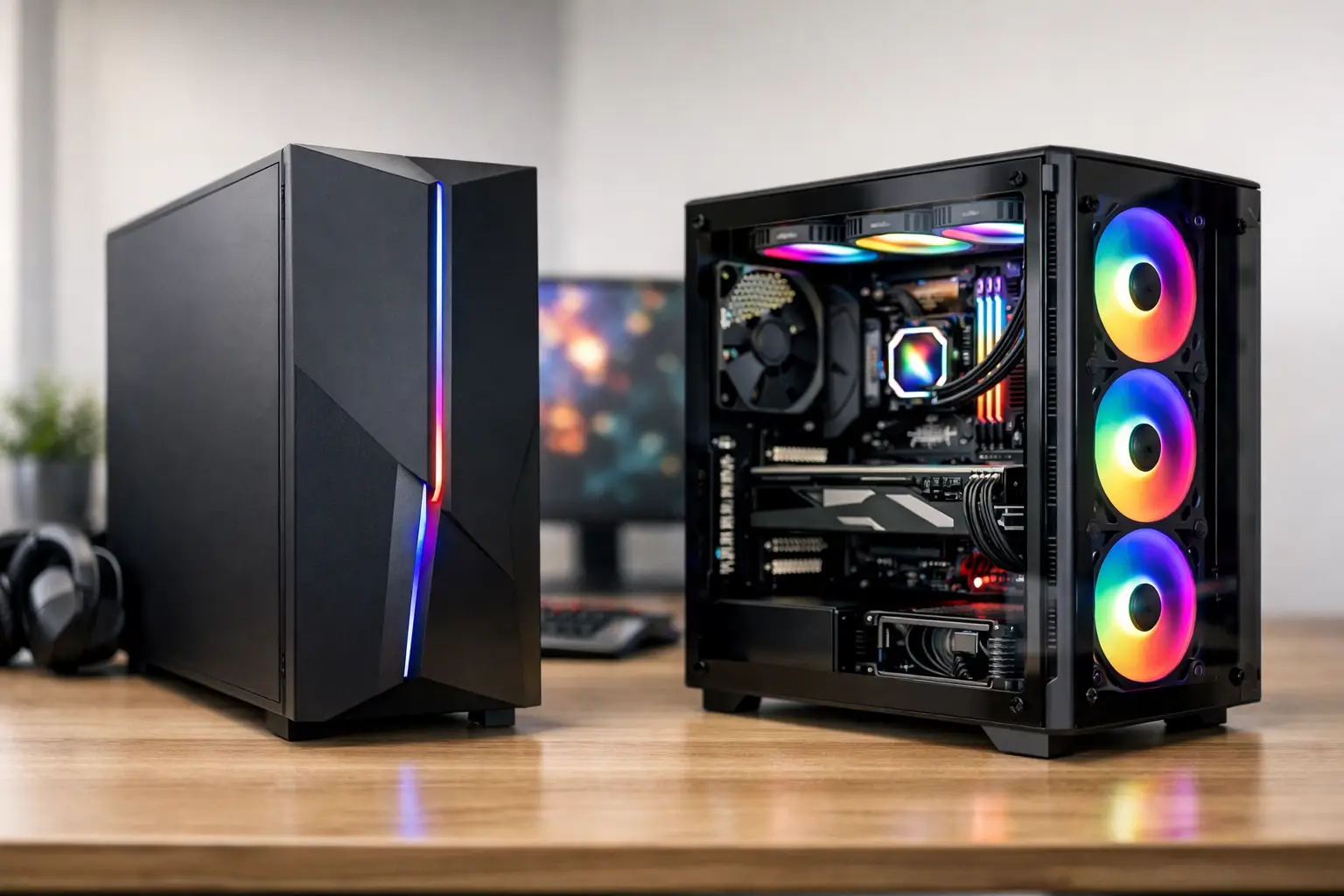
A gaming PC can look excellent on paper and still be the wrong machine for the way you play. The real question in the pre-built vs custom gaming PC decision is not whether one route is universally better. It is whether you need a proven, ready-to-order specification or a system shaped around your games, display, creative work and future plans.
For some buyers, a pre-built PC is the fastest route to high-quality gaming. For others, choosing each part provides better value, a clearer upgrade path and a machine that feels genuinely their own. The best choice comes from understanding what is included beyond the headline graphics card.
Pre-Built vs Custom Gaming PC: The Core Difference
A pre-built gaming PC is sold in a fixed configuration. Its processor, graphics card, memory, storage, case and cooling are already selected, assembled and tested. You choose the model, place the order and receive a complete system ready to set up.
A custom gaming PC is configured around your requirements before it is built. Rather than accepting a standard balance of parts, you can direct more of the budget towards the components that affect your experience most. That may mean a stronger graphics card for 1440p or 4K gaming, additional storage for a large game library, more memory for editing, or a particular case and cooling arrangement to achieve the look you want.
There is also a useful middle ground. A specialist pre-built gallery can offer carefully balanced, ready-to-order systems without the compromises often associated with mass-market PCs. The configuration is fixed, but the component selection, assembly and testing standards can still be premium.
When a Pre-Built Gaming PC Makes Sense
A pre-built PC is a practical choice when you want confidence without spending hours comparing component specifications. A well-designed system has already been balanced for gaming performance, thermals and compatibility. This is especially valuable if you are moving from a console, replacing an older desktop or buying a first serious gaming PC.
Speed and simplicity matter too. With a fixed specification, there are fewer choices to make and less risk of second-guessing every component. You can focus on the performance level you need, such as smooth esports gaming at high refresh rates or detailed single-player gaming at 1440p, then select a system that meets it.
Pre-built systems also provide a clearer support route. When the computer is supplied as one complete machine, the builder has responsibility for the full configuration. If there is an issue, you are not left determining whether the memory, motherboard, power supply or software installation is at fault.
That said, not all pre-built PCs deserve the same level of trust. Some off-the-shelf machines use vague component descriptions, limited cooling, low-capacity power supplies or cases with restricted airflow. A listing that simply promises a processor tier and graphics card model does not tell the complete story. The quality of the motherboard, power supply, storage drive, cooling and case directly affects reliability, noise levels and upgrade potential.
Why a Custom Build Can Be Better Value
A custom gaming PC gives you control over where your money goes. This is particularly useful because no two buyers have identical priorities.
If competitive games are your main focus, you may benefit most from a fast processor and a graphics card selected to suit your monitor's refresh rate. If you play cinematic games at 4K, the graphics card will usually deserve a larger share of the budget. If your PC also handles video editing, 3D work, software development or streaming, extra memory, storage and processor capacity may be more valuable than chasing the highest possible frame rate.
Customisation also helps avoid paying for features you will not use. There is little value in overspending on decorative lighting if your priority is performance per pound. Equally, there is no reason to settle for a plain, generic enclosure if a clean showcase build, coordinated lighting and carefully managed cabling are part of the ownership experience.
The strongest custom systems are not simply collections of expensive parts. They are balanced machines. A high-end graphics card needs a suitable processor, reliable power delivery, sufficient airflow and a display capable of showing its performance. A specialist builder can make those choices with the complete system in mind rather than leaving you to resolve compatibility alone.
Cost: Look Beyond the Starting Price
It is tempting to compare only the advertised price of a pre-built PC against the total cost of selected custom components. That comparison can be useful, but it is not complete.
A ready-made system may be more cost-effective if it is built around proven component combinations and purchased efficiently by the supplier. Conversely, a custom build can provide better value when it removes unwanted compromises or avoids spending on parts that do not suit your needs. The answer depends on the specification, not the label.
Account for the complete ownership cost. A cheaper machine with limited storage may need an upgrade sooner than expected. A basic cooler may run louder under load. A low-quality power supply can restrict graphics card upgrades later. A case with poor ventilation can make otherwise capable components perform less consistently during long gaming sessions.
There is also value in professional assembly and testing. Building a PC yourself can be rewarding, but it demands time, careful research and confidence around installation, cable management, BIOS settings and fault-finding. A premium custom-built system includes the reassurance that the full configuration has been expertly handcrafted and fully tested before dispatch.
Performance Is About the Whole System
The graphics card usually has the greatest influence on gaming performance, but it is not the only part that matters. A poorly matched processor can limit frame rates in CPU-heavy games. Insufficient memory can affect multitasking and demanding titles. Slow or overcrowded storage can increase loading times and leave little room for new releases.
Cooling is another area where specifications can be misleading. A processor may technically be compatible with a basic cooler, yet a more capable air cooler or liquid cooling setup can maintain lower temperatures and reduce fan noise under sustained load. This matters if you play for long sessions, stream or use the same desktop for intensive productivity work.
For this reason, compare systems as complete builds. Check the stated memory capacity and speed, SSD capacity, power supply quality, cooling approach and case airflow. If these details are not clearly identified, ask before buying. A premium gaming PC should be transparent about the parts that support its headline performance.
Upgrades and Longevity
A custom PC is often easier to plan around future upgrades because you can choose a case, motherboard and power supply with your next steps in mind. You might start with a capable mid-range graphics card, then upgrade later without replacing the entire system. Choosing additional power headroom, spare storage capacity and a case with room for larger cooling hardware can make that future change simpler.
However, pre-built does not automatically mean difficult to upgrade. A specialist pre-built system using standard, quality components can be an excellent foundation. The difference is that you should verify the details before purchase rather than assume them. Confirm how many memory slots are available, whether there are spare M.2 storage slots, the power supply rating and physical room for a future graphics card.
Upgrade planning should be realistic. Buying far beyond your current needs solely for an uncertain upgrade several years away may not be the best use of budget. Aim for a system that performs brilliantly now and has sensible room to grow where it matters.
Aesthetics, Build Quality and Ownership
Your PC is part of your desk space, often for years. A custom system offers greater choice over case style, colour theme, lighting, cooling presentation and cable management. This is not only about appearance. The right case can improve airflow, make maintenance easier and provide space for future components.
Build quality is equally practical. Clean cable routing helps airflow and makes upgrades less awkward. Secure mounting, carefully applied thermal paste and sensible fan placement all contribute to a system that is quieter, cooler and easier to live with. These details are difficult to judge from a headline specification, but they separate a thoughtfully built machine from a generic assembly-line product.
For buyers who want personal control without the risk of self-building, a configurable service such as CraftCore's PC Builder provides a strong balance. You can choose the performance and design direction while leaving the assembly, compatibility checks and testing to specialists.
Which Option Should You Choose?
Choose a pre-built gaming PC if you want a ready-to-order, proven specification with minimal decision-making. It is particularly well suited to buyers who know their target performance level and would rather start gaming than research every component.
Choose a custom gaming PC if you have specific performance goals, need a system for both gaming and demanding work, care about a distinctive visual design, or want to shape an upgrade path from day one. It is also the better route when a standard configuration repeatedly gets close to your needs but misses one or two crucial details.
Whichever route you take, begin with your monitor, the games or applications you use most, and the budget you are comfortable investing. A carefully specified PC that matches those requirements will provide more satisfaction than an impressive-looking machine built around compromises you only discover after it reaches your desk.